Biometric Verification Trends Shaping Secure Access Protocols Across Digital Gaming Platforms
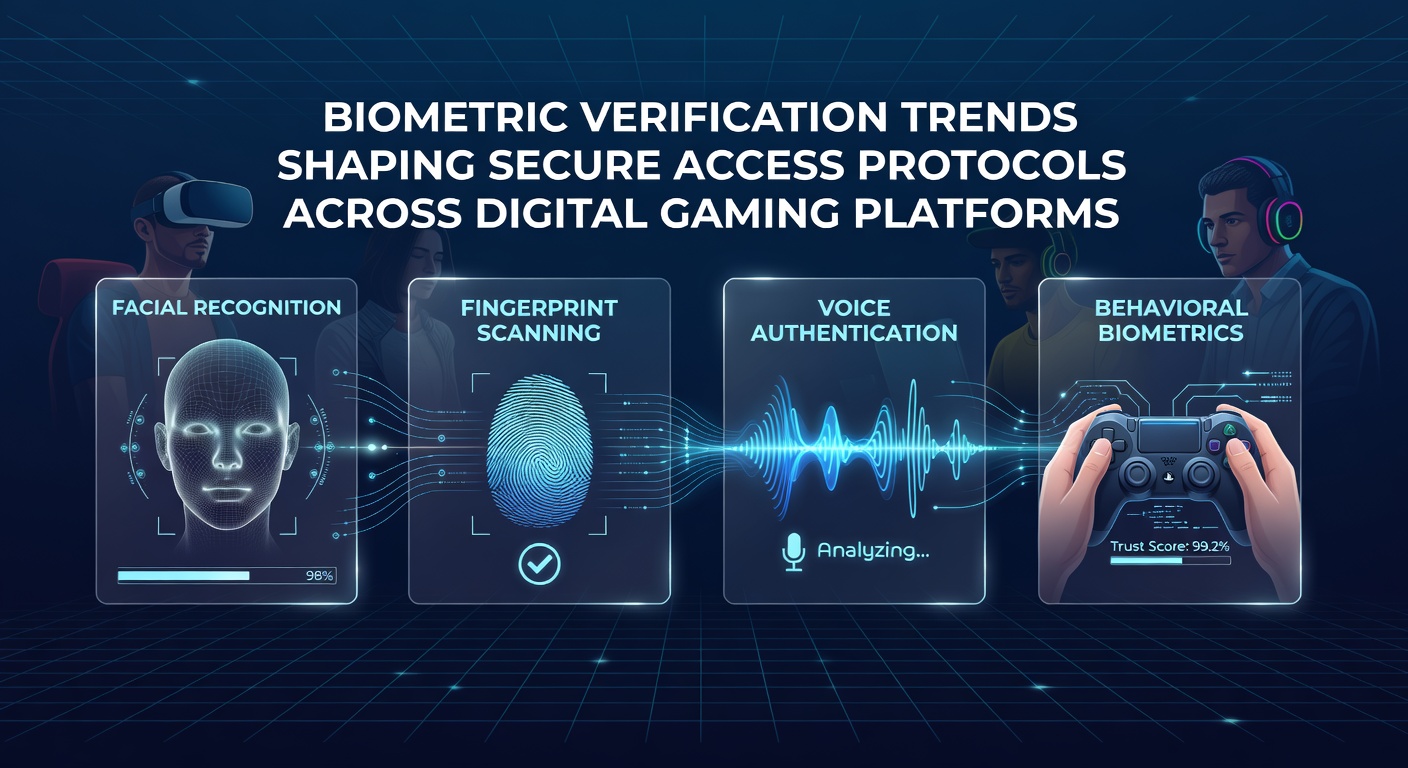
Digital gaming platforms have integrated biometric verification systems at an accelerating pace since 2024, with facial recognition, fingerprint scanning, and behavioral analytics becoming standard components of secure access protocols. These technologies replace or supplement traditional password and two-factor authentication methods, creating layered defenses against account takeover attempts and unauthorized access. Research indicates that platforms handling high transaction volumes adopted these tools to meet evolving regulatory expectations around user identity confirmation.
Core Biometric Technologies in Current Use
Operators deploy multiple modalities depending on device capabilities and jurisdictional requirements. Facial recognition processes live images against stored templates during login sequences, while fingerprint sensors on mobile devices provide rapid verification for returning users. Voice biometrics analyze speech patterns collected during account setup or support interactions, adding another checkpoint that proves difficult to replicate without physical presence. Behavioral biometrics track mouse movements, typing rhythms, and navigation habits in the background, flagging deviations that suggest account sharing or automated scripts.
Platforms combine these approaches through fusion algorithms that weigh multiple signals before granting session access. When one modality encounters poor lighting or hardware limitations, the system shifts priority to alternatives without interrupting the user flow. Data from regulatory filings shows this hybrid model reduces false rejection rates compared with single-method systems deployed in earlier years.
Regulatory Drivers and Adoption Patterns Through 2026
Jurisdictions across North America and Europe introduced or updated identity verification mandates that favor biometric solutions. The Alcohol and Gaming Commission of Ontario expanded its technical standards in late 2025, requiring operators to implement continuous authentication measures for accounts exceeding defined activity thresholds. Similar updates appeared in several U.S. state frameworks, where legislators referenced biometric accuracy benchmarks when drafting compliance checklists.
Figures released by the European Gaming and Betting Association in May 2026 documented a 47 percent increase in biometric login adoption among licensed operators compared with the previous year. The report linked this growth to updated guidance on remote customer identification that recognizes liveness detection as an acceptable method for confirming user presence. Platforms operating across multiple markets aligned their systems to satisfy the strictest applicable rules, resulting in standardized rollout schedules.
Integration with Existing Security Infrastructure
Biometric data flows into broader fraud detection ecosystems rather than functioning in isolation. Systems correlate biometric scores with transaction patterns, device fingerprinting, and geolocation signals to generate risk assessments in real time. When a high-value withdrawal request coincides with an unfamiliar device and altered typing cadence, the platform triggers additional verification steps or temporary holds.
Developers built application programming interfaces that allow third-party providers to handle template storage and matching while keeping raw biometric samples on user devices whenever possible. This decentralized approach addresses storage concerns raised in earlier industry discussions and aligns with data minimization principles appearing in privacy regulations.

Technical Advances and Performance Metrics
Accuracy improvements stem from larger training datasets and refined neural network architectures. Independent testing conducted for several major platforms reported equal error rates below 0.1 percent for facial systems under controlled conditions, though real-world performance varies with camera quality and environmental factors. Continuous authentication models now evaluate hundreds of micro-interactions per minute, enabling session termination within seconds of detecting anomalies.
Hardware manufacturers incorporated dedicated secure enclaves in recent mobile chipsets, isolating biometric processing from the main operating system. This architecture limits exposure of sensitive templates and supports faster matching times that maintain smooth gameplay experiences. Observers tracking platform updates note that these chip-level changes coincided with broader mobile gaming revenue growth reported across multiple markets.
Privacy Considerations and Data Handling Practices
Operators publish detailed policies describing retention periods, encryption standards, and user rights regarding biometric templates. Many delete raw images after initial enrollment while retaining only mathematical representations that cannot be reverse-engineered into identifiable photographs. Audits performed by independent firms verify compliance with these stated practices and examine access logs for unauthorized template queries.
Users receive options to manage their biometric preferences through account dashboards, including the ability to delete stored data and revert to alternative verification methods. Regulatory bodies in several regions require explicit consent language that explains both the benefits and the irreversible nature of certain biometric identifiers once enrolled.
Conclusion
Biometric verification continues to expand its role within digital gaming access protocols as platforms respond to regulatory expectations and technical capabilities. Multi-modal systems, decentralized processing, and integration with behavioral analytics form the current foundation, while ongoing hardware and algorithmic refinements shape future implementations. Data released through 2026 illustrates measurable adoption increases across licensed markets, establishing biometrics as a persistent element of secure gaming infrastructure.